Homeowners insurance usually does not cover foundation repair. As of November 2026, the standard ISO homeowners form Select Your Cover read excludes earth sinking, rising or shifting "regardless of whether" it "is caused by an act of nature or is otherwise caused"[1]. The big exception is an accidental plumbing leak under the house. In 1997, Texas regulators estimated that about 85% of water losses in Nueces County were foundation damage from leaks, and they said the old HO-B form covered that damage even after a federal appeals court ruled it didn't[3].
Here is the kind of moment that sends people searching. A door starts sticking, a crack shows up across the garage floor, or a foundation crew lifting a slab breaks the water line underneath it. The question is always the same: is this the house wearing out, or something that happened to it?
The forms we read are ISO's standard Homeowners 3 form, edition HO 00 03 05 11, as posted by Maine's Bureau of Insurance, and a 2009 Safeco form posted by the Oklahoma Insurance Department[1][2]. The Texas Department of Insurance says "Coverages vary by company," so your own policy's wording decides your claim[4].
Does homeowners insurance cover foundation cracks?
Usually not, because most foundation damage comes from causes the policy excludes. ISO's form excludes "Settling, shrinking, bulging or expansion, including resultant cracking, of bulkheads, pavements, patios, footings, foundations, walls, floors, roofs or ceilings"[1]. The 2009 Safeco form excluded "settling, cracking, shrinking, bulging, or expansion of pavements, patios, foundations, walls, floors, roofs, ceilings, swimming pools, hot tubs, spas or chimneys"[2].
The California Department of Insurance lists earth movement among the perils generally not covered by a homeowners policy, along with "Wear and tear or maintenance"[7]. The Texas Department of Insurance says companies "won't pay for damages that happen over time"[6].
For the basics of what a home policy pays for, start at our home insurance hub.
A contractor cracked my foundation. Is that earth movement?
If the soil under it moved, the forms we read treat that as earth movement no matter who caused it. ISO's earth movement exclusion covers earthquake, landslide, "Subsidence or sinkhole" and "Any other earth movement including earth sinking, rising or shifting"[1]. It then says the exclusion applies whether the movement "is caused by an act of nature or is otherwise caused"[1].
The 2009 Safeco form went further. It listed "erosion, shifting or displacement of materials supporting the foundation" and "movement resulting from improper compaction"[2]. It said the exclusion applied "whether the earth movement is caused by or resulting from human or animal forces or any act of nature"[2]. That same form also excluded "pressure from or presence of plant roots"[2].
There is a carve-out. ISO's form says "direct loss by fire, explosion or theft resulting from any of the above" is covered[1]. Safeco's said "We do cover direct loss by fire, explosion or theft"[2].
Does homeowners insurance cover a slab leak under the foundation?
Partly, if the leak is accidental. ISO's form covers loss "resulting from an accidental discharge or overflow of water or steam from within a" plumbing, heating, air conditioning or sprinkler system or household appliance on the residence premises[1]. It "includes the cost to tear out and replace any part of a building, or other structure, on the 'residence premises', but only when necessary to repair the system or appliance"[1].
That tear-out line is what pays for breaking open a slab to reach a leaking pipe. Safeco's form said it would "cover the cost of tearing out and replacing any part of the building necessary to repair the system or appliance"[2]. Neither form pays for the pipe. ISO's says "We do not cover loss to the system or appliance from which this water or steam escaped"[1].
ISO's form also makes sure groundwater wording doesn't block the claim. Its exclusions for surface water and "water below the surface of the ground do not apply to loss by water covered" under the plumbing leak coverage[1].
Many forms also require the leak to be sudden. The 2009 Safeco form excluded "continuous or repeated seepage or leakage of water or steam" that "occurs over a period of weeks, months or years"[2]. A 2018 Texas Department of Insurance report found that some companies drew that line at "14 or more days" instead[5]. TDI's guide lists "A continuous water leak" among the things most policies don't cover[4].
What about the cracks a leak causes?
This is where the forms get contested. ISO's form covers loss from a sudden leak "Unless the loss is otherwise excluded"[1]. Its earth movement exclusion, which reaches movement "otherwise caused," is one of those other exclusions[1]. How those two clauses fit together for a cracked slab is exactly what Texas fought about.
In an August 1997 bulletin, the Texas Department of Insurance wrote that a federal appeals court had recently held, in the Sharp opinion, that the Texas HO-B policy "does not cover structural and cosmetic damage to a dwelling that results from a foundation shift which itself was caused by a plumbing leak beneath the house"[3]. The department answered plainly: "The Department does not agree with the Sharp holding"[3].
The stakes were not small. The department estimated "that approximately 85% of these water losses in Nueces County are due to damage to foundations as a result of accidental discharge"[3]. It said homeowners rates there "have increased by 36.4% over the past two years, compared to a statewide decrease of 4.1%"[3]. It warned that refusing these HO-B claims "may subject the insurer to disciplinary action"[3].
The department also said federal decisions on state law issues "are not binding on Texas state courts"[3]. So it expected insurers "to pay claims in accordance with the Department's position as stated in this bulletin"[3].
The fight had a history. In 1993, the Texas Legislature required an endorsement that "excluded coverage for damage to foundations or slabs of insured dwellings when such damage was caused by accidental discharge," and that law "was repealed in 1995"[3]. A working group then recommended endorsements limiting coverage "for tear-out and replacement of building and land for accessing plumbing leaks," and the Commissioner adopted them[3]. The bulletin added that the tear-out limitation "does not affect coverage otherwise provided in the policy for damage or loss to slabs or foundations"[3].
Texas has moved on since. TDI's 2018 report says "Insurers began filing and using their own forms in 2003," though "some still use the promulgated forms"[5]. TDI's current home insurance guide lists "Damage to foundations or slabs" among the common endorsements, or add-ons, that companies offer[4]. So the 1997 bulletin speaks to the old HO-B form, not to every policy sold today[3][5].
Is a sudden crack, a bowed wall or frost heave covered?
Mistake 1: "It showed up overnight, so it's covered." ISO's form excludes settling "including resultant cracking"[1]. That exclusion turns on the cause, not on how suddenly a crack shows up.
Mistake 2: "A cracked or bowed foundation counts as a collapse." ISO's collapse coverage applies only to "an abrupt collapse"[1]. It does not apply to a building that "is standing, even if it shows evidence of cracking, bulging, sagging, bending, leaning, settling, shrinkage or expansion"[1]. Even then, loss to a foundation is not included under most collapse causes "unless the loss is a direct result of the collapse of a building or any part of a building"[1].
Mistake 3: "Frost heave is weather, so it's covered." ISO's form excludes "Freezing, thawing, pressure or weight of water or ice, whether driven by wind or not" to a "Footing, foundation, bulkhead, wall, or any other structure or device that supports all or part of a building"[1].
Foundation damage, situation by situation
| What happened | What the forms say | Typical result |
|---|---|---|
| Settling or shrinking cracks | Settling and resultant cracking excluded[1][2] | Not covered |
| Soil sank or shifted, any cause | Earth movement excluded, nature or not[1][2] | Not covered |
| Tree roots pushed on it | Plant roots excluded in Safeco's form[2] | Not covered in that form |
| Frost heave or ice pressure | Freezing and thawing to a foundation excluded[1] | Not covered |
| Sudden leak under the slab | Tear-out to repair the system covered, not the pipe[1][2] | Access may be covered |
| Leak lasted weeks or months | Repeated seepage or leakage excluded[2][4] | Not covered |
| Fire or explosion | Fire and explosion carved out of earth movement[1][2] | Typically covered |
Run your own slab leak through the policy
Here is a worked example you can redo with your own quotes. Say a plumber finds a leak in a supply line under your kitchen slab, and you have three bills: the plumber's pipe repair, cutting and patching the slab to reach the pipe, and new flooring that the water ruined.
- The pipe repair: ISO's form does not cover the system the water escaped from[1]. That bill is typically yours.
- Cutting and patching the slab: ISO's form covers tear-out and replacement "only when necessary to repair the system"[1]. If the slab had to be opened to fix the pipe, this bill may be covered.
- The ruined flooring: ISO's form covers water damage from an accidental leak unless otherwise excluded[1]. A time limit comes from other forms: the 2009 Safeco form excluded leakage over "weeks, months or years," and some Texas forms in TDI's 2018 table cut off at "14 or more days"[2][5].
Add the bills that may be covered, then subtract your deductible. TDI's guide defines it as "the amount of the claim that you must pay yourself"[4]. Ask your agent before filing if you have questions about how claims are handled. If a foundation company also says the slab moved, ask your insurer in writing how it applies the earth movement exclusion to your case[1].
When is foundation damage covered?
When a covered event does the damage. TDI says "Your home policy pays for damages from fire, tornadoes, hailstorms, and theft"[6]. ISO's form keeps fire and explosion covered even when they result from earth movement[1].
Fire can reach deeper than people expect. The California Department of Insurance says that after past wildfires, "the extreme heat of some fires (and some new building code requirements) necessitated the building of new foundations and the removal of the debris from the damaged foundation"[7]. It calls this "a situation that can be easily overlooked when determining building limits"[7].
What to do before you call a foundation company
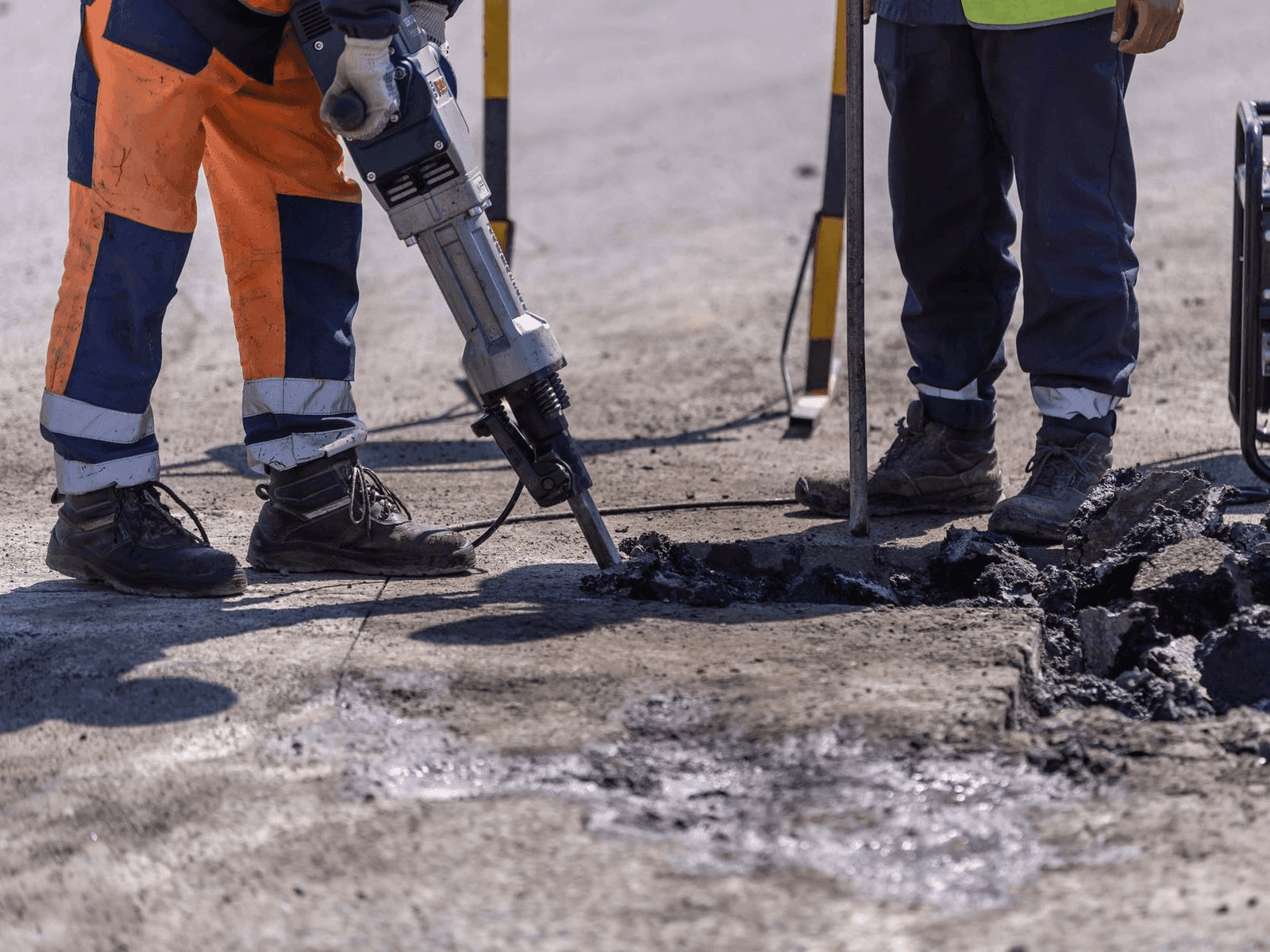
If water is involved, act fast. TDI says "If you have a sudden leak, shut your water off at the main" and warns "Your insurer may deny your claim if you don't protect your property"[8]. Select Your Cover suggests photographing the crack and any wet areas before anyone opens the floor.
Then read three parts of your policy: the settling exclusion, the earth movement exclusion and the water damage coverage[1]. In Texas, check for a foundation or slab endorsement[4]. If a leak also led to mold, see our guide on whether homeowners insurance covers mold. Pest damage is a separate exclusion: ISO's form excludes "Birds, rodents or insects" and TDI lists "Termites, insects, rats, or mice" among things most policies don't cover[1][4]. Our guide on termite damage has more.
Comparing insurers? Our side by side pages, such as State Farm vs USAA home insurance, show what each one publishes about its coverages.
This page explains how homeowners policies are typically written, based on the forms and regulator documents we read. Your own policy wording and your state's law decide your claim. It is not insurance advice, and we are not an insurance agent.
Common questions
Does homeowners insurance cover foundation cracks?
Not when the cracks come from the house settling. ISO's standard form excludes settling, shrinking, bulging or expansion, including resultant cracking, of footings, foundations, walls and floors. The 2009 Safeco form we read had the same exclusion. Cracks caused by a covered event, such as a fire, are a different question.
Does homeowners insurance cover a slab leak?
Often the access part, not the pipe. ISO's form covers water damage from an accidental plumbing leak and the cost to tear out and replace part of the building when necessary to repair the system. It does not cover the system the water escaped from. The 2009 Safeco form we read excluded seepage or leakage that went on for weeks, months or years.
Does homeowners insurance cover foundation damage from tree roots?
Not in the 2009 Safeco form we read, which excluded pressure from or presence of plant roots. Other forms word this differently, so read your own exclusions and ask your insurer how it treats root damage before you file a claim.
Is foundation damage from an earthquake or flood covered?
Not by a standard home policy. ISO's earth movement exclusion starts with earthquake, and its water exclusion covers flood and water below the surface of the ground. The Texas Department of Insurance says you can buy separate policies for floods and earthquakes.
Can I buy extra coverage for my foundation?
In Texas, often yes. The Texas Department of Insurance lists damage to foundations or slabs among the common endorsements, or policy add-ons, that companies offer. Ask your agent what your insurer's foundation endorsement covers and what it costs before you need it.
Does homeowners insurance cover foundation settling?
Usually not. ISO's standard form excludes settling, shrinking, bulging or expansion of foundations, including resultant cracking, and the 2009 Safeco form we read excluded settling too. In 1997, Texas regulators said the old HO-B form did cover settling damage caused by an accidental plumbing leak.
Sources
- [1] Insurance Services Office: Homeowners 3 Special Form, HO 00 03 05 11, as posted by the Maine Bureau of Insurance · accessed 2026-11-25
- [2] Safeco Homeowners Policy, form HOM-7030/EP 1/09, posted by the Oklahoma Insurance Department · accessed 2026-11-25
- [3] Texas Department of Insurance: Commissioner's Bulletin B-0032-97 (August 22, 1997), slab foundation damage under the HO-B policy · accessed 2026-11-25
- [4] Texas Department of Insurance: Home insurance guide · accessed 2026-11-25
- [5] Texas Department of Insurance: Texas Homeowners Policies (April 12, 2018) · accessed 2026-11-25
- [6] Texas Department of Insurance: Five things your home policy won't cover · accessed 2026-11-25
- [7] California Department of Insurance: Residential Insurance, Homeowners and Renters · accessed 2026-11-25
- [8] Texas Department of Insurance: Unexpected indoor waterfall? Home or renters insurance might help (January 29, 2026) · accessed 2026-11-25
More home insurance guides
All guides → Home9 min readUpdated Nov 23, 2026Does homeowners insurance cover mold?Homeowners insurance may cover mold when a covered event like a burst pipe caused it, depending on the policy and your state. Slow leaks and floods are usually excluded, and some forms cap the mold payout.Read the guide
 Home9 min readUpdated Nov 23, 2026Does homeowners insurance cover termite damage?Homeowners insurance usually excludes termite damage. The narrow exception is a sudden collapse from hidden damage. In the forms we read, sagging floors don't count.Read the guide
From our other guides
All guides → Pet6 min readUpdated Nov 24, 2026Does pet insurance cover spaying and neutering?A routine spay or neuter usually isn't covered by standard pet insurance. Three policy forms also exclude the retained testicle neuter, which can cost far more.Read the guide
 Car8 min readUpdated Nov 23, 2026Does car insurance cover a cracked windshield?A cracked windshield is usually a comprehensive claim, and in Florida, Kentucky and South Carolina state law bars the deductible. What applies where you live.Read the guide
 Life9 min readUpdated Nov 21, 2026Does life insurance cover suicidal death?Life policies generally pay for a suicidal death after a two-year exclusion, one year in some states. Before that, premiums are refunded. Reinstating can restart it.Read the guide